
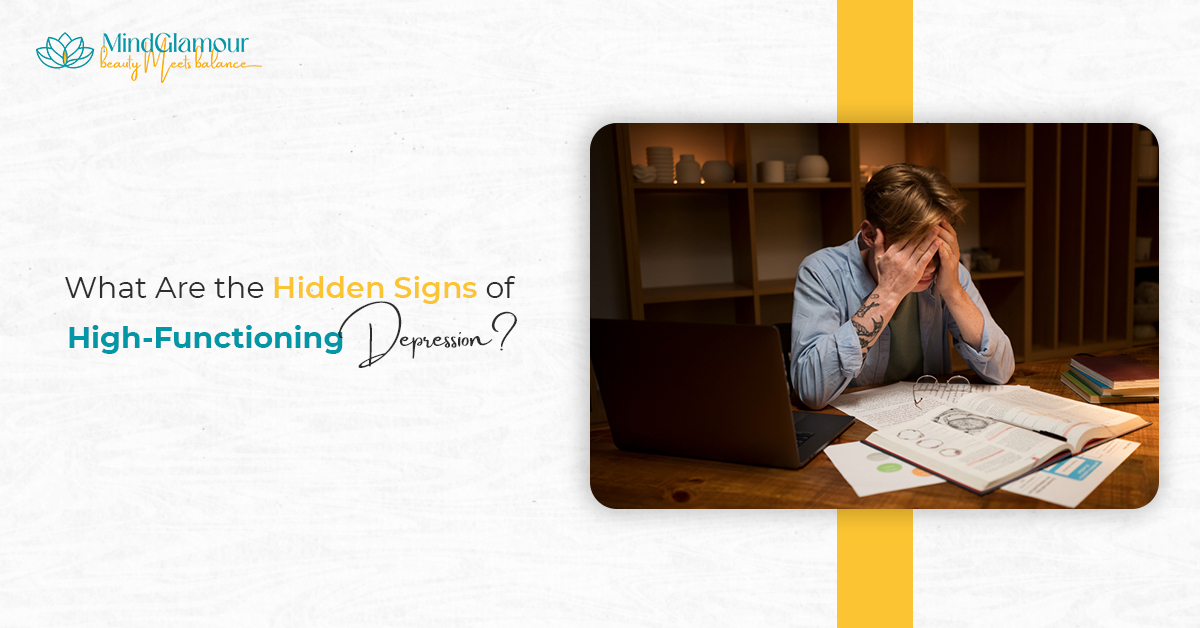
High-functioning depression can be hard to spot. A person might look perfectly healthy. They go to work, care for their family, and handle daily tasks. However, inside, they might feel heavy, tired, or persistently sad.
Below, we’ll help you find hidden signs of high-functioning depression and show how Mind Glamour PLLC can support those who face it.
What Is High-Functioning Depression?
High-functioning depression is a kind of depression in which an individual may do their daily tasks and duties, but is invariably in a low mood.
They may maintain jobs, manage family duties, and appear “fine” to others.
Because they are skilled at hiding their struggles, it’s sometimes called hidden depression.
Hidden Signs to Watch For
Each of these signs may seem normal on its own. Taken together, they could indicate a deeper issue:
- Feeling low most days while still going to work or school.
- Experience of being tired despite rest.
- No longer interested in your hobbies or activities.
- Excessive or insufficient sleeping.
- Eating more or less than usual.
- A feeling of perpetual self-criticism or self-doubt.
- Problem with making minor choices.
- Agreeing with plans but having nothing inside.
- Increased frequency of drinking or using drugs to cope.
- Unaccounted pain or headache.
If these signs persist for months, it may point to persistent depressive disorder (dysthymia), a long-lasting but milder form of depression. Support, treatment, and small lifestyle changes can make a significant difference.
Why People Hide It
People hide depression for many reasons:
- Fear of judgment
- Concern about losing work or friendships
- Belief that their feelings aren’t serious enough
- Desire to avoid adding stress to their lives
Hiding feelings can intensify sadness, while talking about struggles often brings relief.
Small Steps You Can Take Today
These steps are gentle ways to support yourself:
- Say one small truth to someone you trust.
- Try a short walk each day.
- Sleep and eat at regular times.
- Write one feeling in a notebook.
- Cut back on alcohol or drugs.
- Make a plan to see a mental health worker.
These are supportive measures, but they do not replace professional care.
When to Seek Professional Help
Seek professional help if:
- Low mood lasts for weeks or months
- You have thoughts of harming yourself
If you feel unsafe, reach out immediately to someone you trust, call emergency services, or contact a local crisis line.
How Mind Glamour PLLC Can Help
Mind Glamour PLLC offers warm care for people with depression. We meet people where they are. We use many tools to help.
- Telepsychiatry makes care easy from home.
- GeneSight testing helps pick medicines that may work better for you.
- Spravato is a special nasal spray for hard-to-treat depression. It operates in a clinic that provides medical care.
- Sublingual ketamine therapy is another option for some people choose. It is given with safety in mind.
- ADHD testing can help find other issues that may look like depression.
- Medication-assisted treatment helps with substance use. It supports recovery and lowers cravings.
All care at Mind Glamour is patient-focused. Consuela “Swae” Harris, DNP, PMHNP-BC, leads the team. The goal is long-term healing and plans tailored to each individual.
Take the First Step
The initial phase of recovery is to recognize the hidden signs of high-functioning depression.
Get help from a mental health provider if symptoms appear.
Talking with a mental health expert can provide support, techniques, and hope.
Mind Glamour PLLC is willing to listen to you and walk with you. Get care that’s right for you.
Contact us to find your next step. We can explain testing, medicine, or therapy. We can make a safe plan together.
FAQs
Q: Can I work and still have depression?
Yes. Many people continue working while feeling low.
Q: Will therapy help?
Yes. Therapy can share stress management tactics and help lift one’s spirits.
Q: Are medicines useful?
Sometimes. A doctor can help determine if medication may help.