
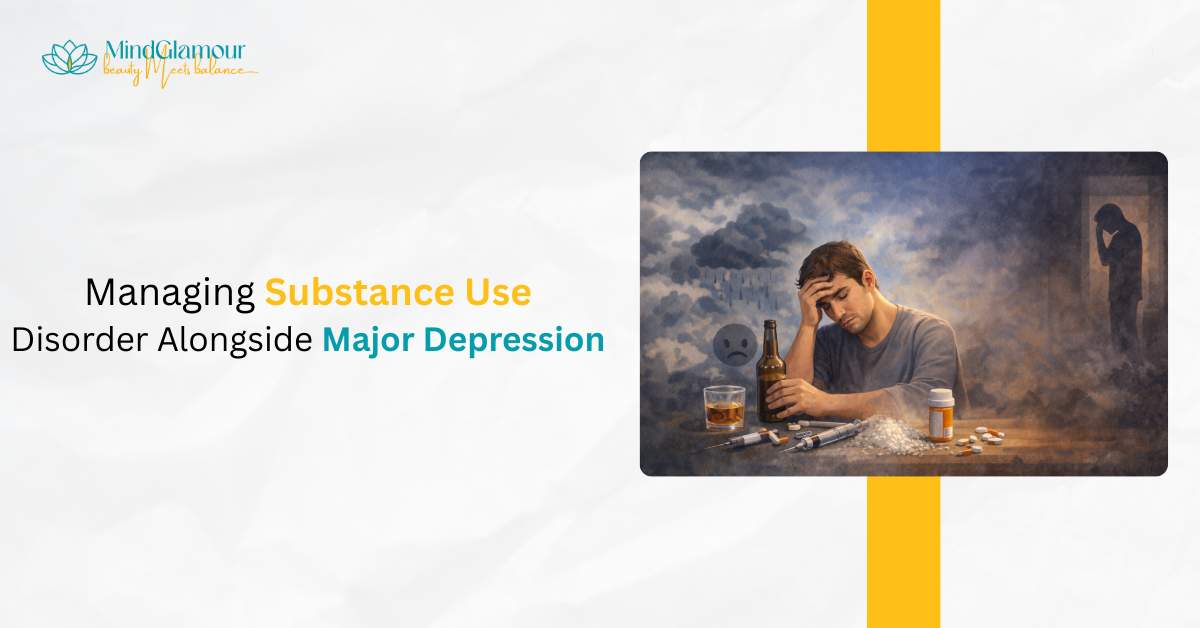
Some days it feels like you’re fighting two battles at once, and honestly, you might be.
For many people, major depressive disorder (MDD) and substance use disorder (SUD) don’t arrive separately.
They come together, feed on each other, and make recovery feel impossible.
There is no clear starting point for people in this situation.
If this sounds like you, you are not alone. More importantly, you have options.
Why Depression and Substance Use So Often Go Hand in Hand
There is a reason these two conditions are diagnosed together. Clinicians refer to this as dual diagnosis, or comorbid disorder, and it is more common than people realize.
It often starts quietly.
What begins as small addictions – subtle patterns that seem manageable at first – can deepen quickly when depression is involved.
When depression sets in, these people feel a persistent low mood, anhedonia (literally joyless), and sleep doesn’t fix the problem.
They feel they have to reach for something that will make them feel something. Even if it is just for a little while.
What makes this a tricky situation is the biology that underlies it:
- Both MDD and SUD affect overlapping brain systems, especially the pathways involving dopamine and serotonin, that are tied to mood, motivation, and reward.
- The HPA axis becomes dysregulated when there is chronic emotional stress. This means there is an increased likelihood that both conditions will co-occur.
- The substances may provide short-term relief, but that relief will actually worsen the depression the longer the use continues.
Understanding this cycle is not about placing blame, but rather understanding the problem at hand.
The Cycle That Keeps People Stuck
Those who are entrenched in this cycle tend not to understand that the co-occurrence of depression and substance use is not merely coincidental; it is an active participant in the major factors that will make the depression harder to treat.
When you understand the stages of addiction – from early experimentation to dependence – it becomes clearer how quickly things can escalate, especially when depression is present:
- While alcohol may calm immediate anxiety, it will worsen depression in the long run due to negative effects on sleep and serotonin. Alcohol is a central nervous system depressant and will ultimately serve to make anxiety and depression worse.
- Although stimulants may give an immediate boost in mood, they create significant dopamine depletion, which can lead to an overall worse mood than prior to the use of the stimulant.
- Chronic use of opioids can lead to depression that is resistant to treatment, and therefore, while there may be an emotional pain relief from opioids, it will be accompanied by chronic depression.
In addition to this, untreated depression can significantly increase the likelihood of relapse in substance use recovery.
Because the mood disorder is not properly managed, many people resort to substance use solely to manage the pain.
Because of this, it is often the case that managing one condition while neglecting the other will not be successful for long.
Related – What Compassionate Substance Use Treatment Looks Like
The Possibilities of Integrated Treatment
What do we mean by ‘integrated treatment’?
Good care begins with a thorough psychiatric evaluation – one that takes the time to understand what’s driving what and the direction of each of the causes in the cycle.
For example, if the cause of the depression is substance-induced, then the depression might dissipate if the person is no longer using the substances.
However, in many cases, the depression is present in the individual long before they begin using the substances, and that early presence of depression can contribute to the individual using substances to help cope with the depression.
These distinctions are significant and matter when planning chronologically sequenced treatment.
Medication-Assisted Treatment (MAT)
A structured substance abuse treatment plan in cases of depression and substance use disorder is more daunting and comprises higher risks.
Depending on the substance use, a drug treatment plan can also include the use of buprenorphine, naltrexone, or methadone along with antidepressant medications.
This type of treatment, where two (or more) disorders are being treated at the same time (or using, also referred to as comorbid treatment), requires a high degree of clinical coordination.
Integrated care can bring noticeable improvement in a person’s quality of life as they work through each disorder simultaneously.
Therapy That Works for Both
Among other psychosocial therapies that work well with dual diagnoses, two are at the top of the list: Cognitive Behavioral Therapy (CBT) and Motivational Interviewing (MI).
These are the interventions that will work to break the cycle of recurrent, chronic depression and substance use disorder.
These are also interventions that have demonstrated efficacy for depression and addictive behaviors.
Don’t Forget the Basics
What we eat, how we move, and how we sleep may not seem as important, but they are important to neurobiological recovery.
An optimal treatment plan makes room for considerations around basic, but essential, self-care.
You Deserve Care That Sees the Whole Picture
What is needed here is a clinician who acknowledges the complexity of depression and substance use disorder, and the interwovenness of the two, as well as how to approach each of them in a comprehensive manner.
Dr. “Swae” Harris, at Mind Glamour PLLC, along with her team, specializes in integrated and holistic psychiatric care and has multi-year experience in the field.
Therefore, whether you have just begun to understand your problem(s) or have been navigating the complexities of the issues at hand for a long time, her team is ready to assist you at your current stage.
Support that considers the entirety of your problem(s) is waiting for you at Mind Glamour PLLC.Book your appointment now!
FAQs
What does SUD stand for – and what is SUD in medical terms?
SUD is the SUD abbreviation for Substance Use Disorder – a recognized clinical condition involving compulsive substance use despite harmful consequences.
You may also know it by other terms for addiction such as substance abuse, chemical dependency, or substance dependence.
Can both conditions really be treated at the same time?
Yes. Integrated treatment that addresses MDD and SUD simultaneously is the clinical standard and consistently achieves much more favorable outcomes than treating them separately.
Do I need to be fully sober before starting psychiatric care?
No. An experienced clinician is able to evaluate the situation and initiate the care process without prior alcoholism treatment.
How can I be sure that I have a dual diagnosis?
The most accurate answer can be given through a psychiatric evaluation.
A substantial number of individuals are taken aback by the degree of association that exists between their depression and use of substances.
Does Mind Glamour offer telehealth services?
Yes. Mind Glamour PLLC offers telepsychiatry which means that you can receive professional assistance from any location.